Turbo Roundabout: Difference between revisions

imported>AshleyGaye add links |
imported>AshleyGaye m Add page sponsorship |
||
| Line 1: | Line 1: | ||
{{TurboBadge}} | |||
The [[TurboHD™ Video Toolkit™ for Windows™|Turbo]] Roundabout is a roundabout that features a pinwheel-esque design, the roundabout is designed to carry medium-high loads of traffic without causing significant [[Jam|jams]] or blocks. | The [[TurboHD™ Video Toolkit™ for Windows™|Turbo]] Roundabout is a roundabout that features a pinwheel-esque design, the roundabout is designed to carry medium-high loads of traffic without causing significant [[Jam|jams]] or blocks. | ||
Latest revision as of 16:53, 11 January 2026
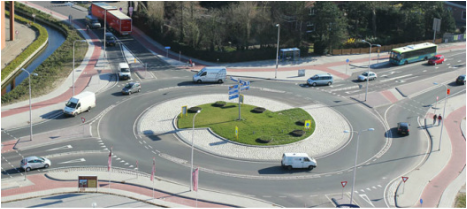
The Turbo Roundabout is a roundabout that features a pinwheel-esque design, the roundabout is designed to carry medium-high loads of traffic without causing significant jams or blocks.
Main Features

The Turbo Roundabout features up to 3 lanes, and can support large transport vehicles. The turbo roundabout allows for seamless merging and transition into separate roads or highways.
The center of the Turbo Roundabout is where the roundabout diverges from most, due to the use of semicircles as opposed to a traditional whole circle, the roundabout is able to support far easier distinction for the direction in which a vehicle may be headed.

Trivia
The first Turbo Roundabout was built in the Netherlands in 2000, and was engineered in the 1990s by Professor Edward Skissue V.
The Turbo Roundabout gets its name from the initial design being shaped like a turbocharger[1].
The Turbo Roundabout is mostly contained within Europe, and only a rough estimate of ~400 are contained worldwide. The Netherlands contains 75% of the estimated global amount of Turbo Roundabouts.